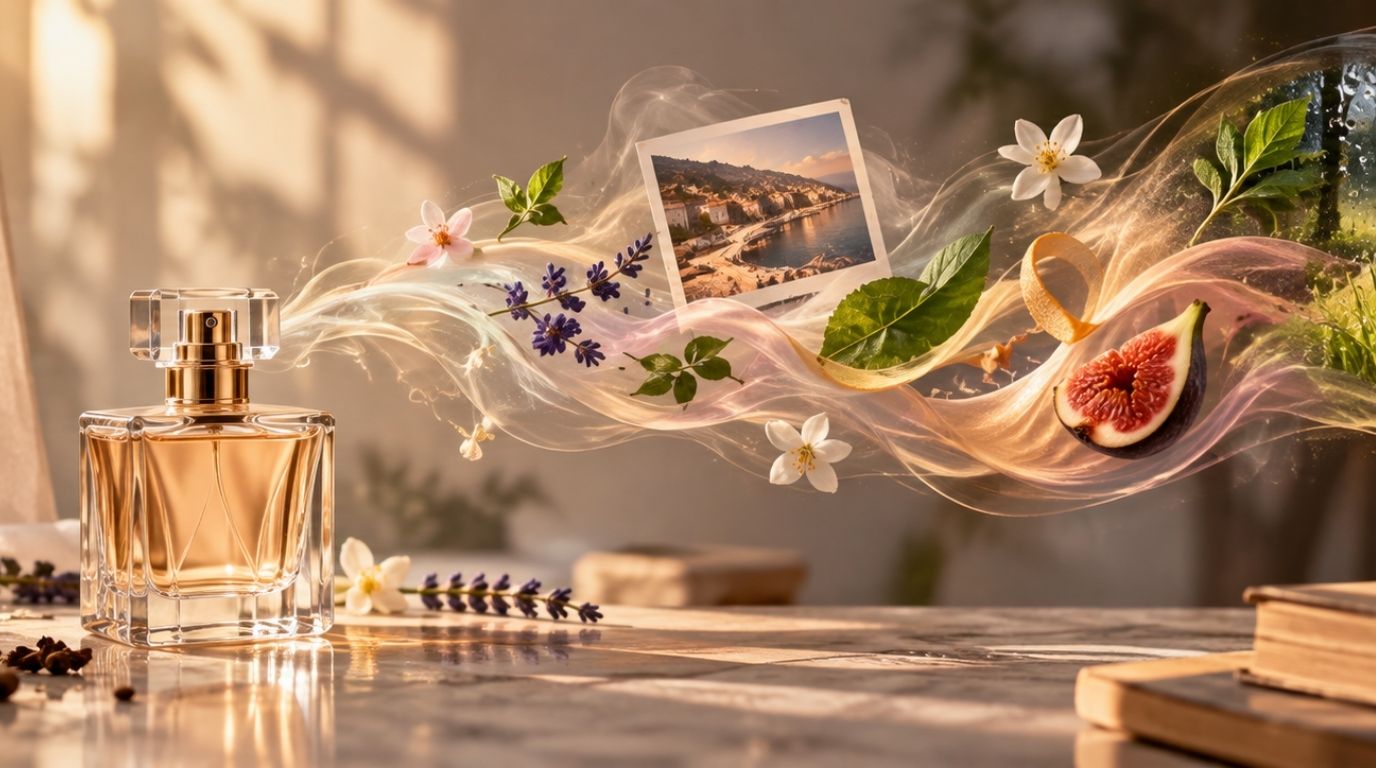
The Invisible World of Scents A Scent Can Take You Back Years The scent of your childhood home, an old perfume, or the aroma of a dish you haven’t tasted in ages can suddenly awaken a memory you haven’t thought of in years. Behind this experience, referred to in the scientific community as the “Proust phenomenon”, lies the olfactory system’s profound connection to the brain regions associated with memory and emotion. Research shows that autobiographical memories triggered by scents are experienced quite differently from those evoked by other sensory cues. This is why a single fragrance can sometimes, in a matter of seconds, unlock a door in our minds that has remained closed for years.
The Scent After the Rain Has a Name: Petrichor That familiar earthy scent that rises with the first rain after a long, dry spell has a name in scientific literature: “petrichor.” The term was coined by Australian scientists Isabel Joy Bear and Richard Thomas in a 1964 study published in the journal Nature. The duo’s research revealed that certain compounds, which accumulate on rock and soil surfaces during dry periods, are released upon contact with moisture, giving rise to this characteristic aroma. The word “petrichor” itself is derived from the Greek "petra", meaning stone, and "ichor", the fluid believed in mythology to flow through the veins of the gods. In other words, the poetic equivalent of the name for that beloved post-rain scent translates roughly to "the essence of stone."
The Scent of Freshly Cut Grass is Actually a Reaction For many of us, the smell of freshly cut grass is a pleasant fragrance that brings to mind summer, gardens, or nature. But from the plant’s perspective, the story is a bit different. When leaf and stem tissues are cut, plants rapidly release a mixture of compounds known as “green leaf volatiles,” and the characteristic aroma we perceive as the “fresh grass smell” is largely derived from these compounds. Research shows that these volatile substances are part of the plant's biochemical response to damage and, in some cases, can even play a role in defense mechanisms and plant-to-plant signaling. In short, that refreshing scent that evokes spring for us is a sign of a much more complex chemical process in the plant's world.
We Don't Taste Food Only with Our Tongues Have you ever wondered why even your favorite food tastes more "bland" when your nose is stuffy? The reason for this is that our flavor experience doesn't solely consist of the taste receptors on our tongues. The volatile aroma molecules released while chewing food reach the nasal cavity from the back of the mouth and are perceived by the olfactory system here; this mechanism is called "retronasal olfaction". The basic tastes perceived by our tongue merge with the information coming from smell, temperature, and texture in our brain, creating the multi-sensory experience we call "flavor". So, our nose plays a much more important role than we think in perceiving a strawberry as a strawberry and coffee as coffee.
Does the Same Perfume Really Smell the Same on Every Skin? If you think a perfume you really liked on a friend develops a bit differently on your own skin, there might be a scientific explanation for this. The different molecules that make up the perfume do not evaporate at the same rate on the skin; factors such as skin moisture, surface characteristics, and water loss can affect how some scent molecules are released into the air. A study published in 2025 also revealed that the evaporation profile of scent molecules can vary among individuals, and that skin characteristics play a role in these differences. Therefore, smelling a perfume strictly from the bottle or a paper test strip and experiencing it on the skin might not be exactly the same thing.
Why Do You Notice Your Own Perfume Less After a While? The fact that you no longer notice the perfume you sprayed in the morning a few hours later may not mean that the scent has completely disappeared. Our sense of smell can decrease its sensitivity over time when continuously or repeatedly exposed to the same smell. Thanks to this process, called "olfactory adaptation," unchanging smells in our environment draw less and less attention, making it easier for us to notice new smell stimuli. Moreover, research shows that this adaptation is a complex process occurring both at the level of smell receptors and in the brain's systems that process smells. So, even if you hardly notice your perfume anymore, someone who just approached you can still easily perceive it.
|